


Patient Leaders
are a powerhouse of organizational leadership—uniting strategy, systems insight, and human-centered care to drive equity, clarity, and meaningful change across even the most complex environments.
Patient Leaders contribute a sophisticated, practice-tested competency set that spans six interconnected domains: systems navigation, communication and relational influence, insight generation through lived-experience analysis, ethical and equity-centered judgment, empowerment-oriented leadership, crisis-responsive problem-solving and entrepreneurship, financial management & strategic organizational planning
Patient Leaders deliver a powerhouse set of transferable skills
that expose system blind spots, strengthen trust, and elevate decision-making—driving sharper,
more effective performance across any organization.
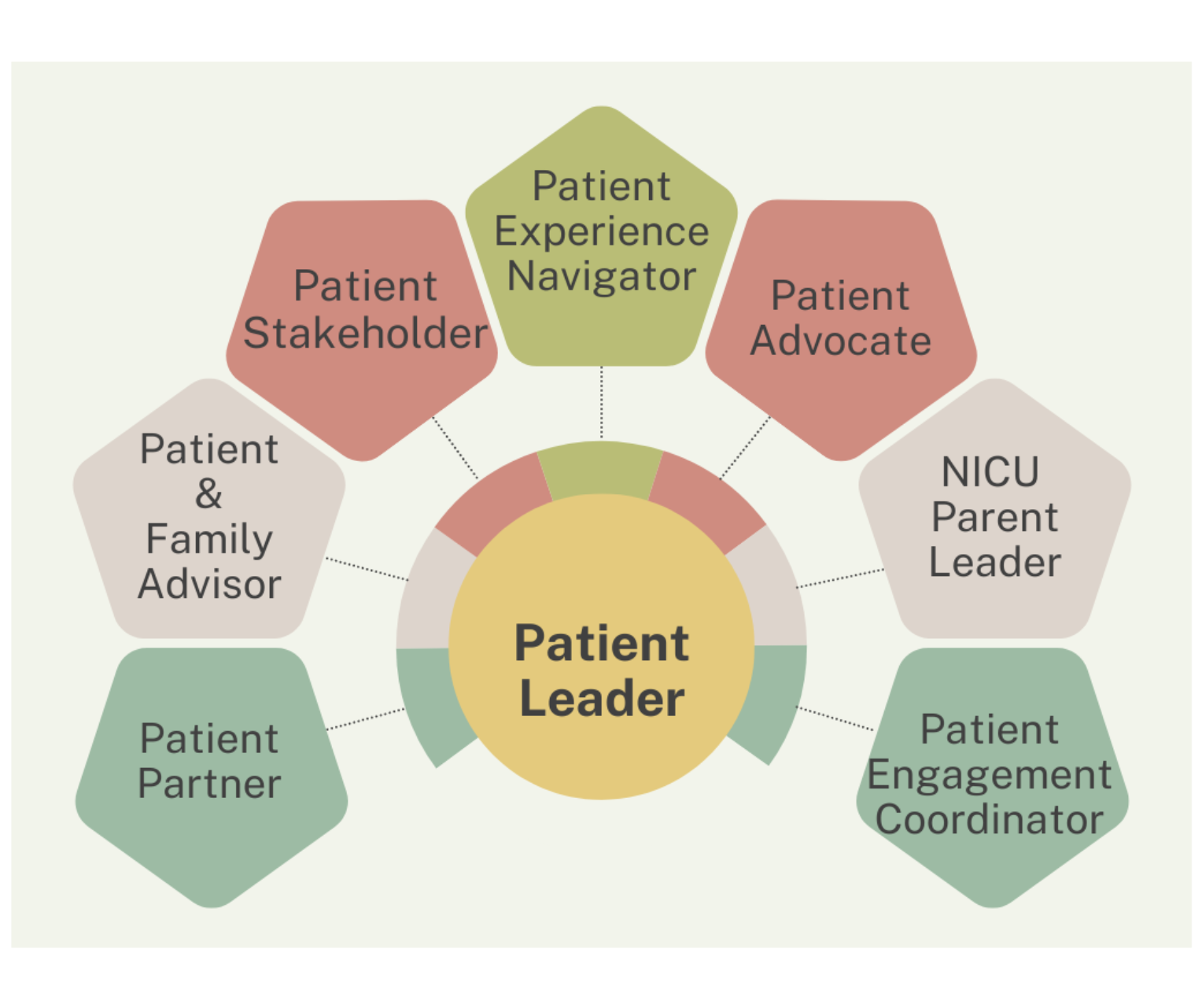
Competency Framework for
Hiring Patient Leaders
Domain #1:
Systems Navigation &
Complexity Management
Patient Leaders excel in navigating fragmented, overlapping systems where rules, processes, and decision points vary widely across sectors. Their ability to recognize how healthcare, insurance, legal, social services, and research environments intersect equips them to anticipate obstacles and move work forward when others encounter delays. This domain reflects a practical, systems-oriented intelligence—positioning Patient Leaders as strong contributors in operations, cross-functional coordination, service design, and roles requiring clarity in complex environments.
Transferable Skills:
Interprets complex workflows and policies across multiple systems
Recognizes systemic bottlenecks and uncovers hidden operational barriers
Coordinates communication across teams, agencies, and service sectors
Maintains direction during ambiguity, shifting requirements, or disruptions
Translates multi-step processes into clear, actionable guidance
Core Competencies
Systems Mapping
Understands how interconnected systems influence one another and identifies where decisions create downstream effects.
Cross-Functional Coordination
Facilitates alignment and progress across stakeholders who operate under different mandates or priorities.
Operational Troubleshooting
Navigates around delays or breakdowns by identifying alternative pathways and clarifying next steps.
Behavioral Indicators
Detects patterns across fragmented systems and anticipates barriers
Resolves multi-stakeholder challenges with minimal escalation
Converts complex requirements into step-by-step instructions
Maintains clarity and forward momentum during procedural change
Identifies opportunities for improved flow and system performance
Organizational Applications
This domain supports roles in operations, administration, policy implementation, project or program management, human-centered design, quality improvement, care coordination, and research operations, where system fluency enhances efficiency and problem-solving.
Domain #3:
Insight Generation &
Lived-Experience Research
Patient Leaders demonstrate strong analytical and inquiry-driven competencies grounded in real-world experience. They excel at gathering qualitative data, identifying actionable patterns, and integrating personal insight with organizational evidence. This domain reflects the ability to transform lived experience into structured knowledge—making Patient Leaders valuable contributors in research, evaluation, quality improvement, strategic planning, and human-centered design.
Transferable Skills:
Skilled in qualitative data gathering through interviews, observation, and informal inquiry
Strong pattern recognition and root-cause identification across complex or fragmented systems
Ability to synthesize experiential insights with formal data to inform decisions
Produces clear, structured, and actionable recommendations
Helps organizations anticipate barriers and understand user experience from a frontline perspective
Core Competencies
Qualitative Data Collection
Gathers information through structured and unstructured methods—interviews, observations, conversations, and case documentation—to understand stakeholder experiences and system behavior.
Thematic Analysis
Identifies patterns in qualitative information, including barriers, gaps, inefficiencies, and emerging trends that may not surface in quantitative metrics alone.
Evidence Integration
Combines lived-experience insights with empirical data, aligning recommendations with organizational objectives, performance measures, and strategic priorities.
Behavioral Indicators
Root-Cause Identification: Analyzes recurring issues and traces problems to underlying system or process failures rather than surface-level symptoms.
Actionable Reporting: Communicates findings in structured, practical formats—summaries, briefs, narratives, or process maps—to support informed decision-making.
Organizational Alignment: Connects insights to broader goals such as performance improvement, user experience, operational consistency, and risk mitigation.
Stakeholder Sensitivity: Recognizes how different populations experience systems differently and adjusts analysis accordingly.
Forward-Looking Insight: Anticipates emerging challenges or system gaps based on qualitative trends and frontline experiences.
Organizational Applications
This competency domain is highly relevant for roles in program evaluation, quality improvement, research design, user experience (UX), policy development, strategic planning, community engagement, organizational development, and service redesign. Individuals with these capabilities help organizations better understand real-time system performance, close communication gaps, anticipate user needs, and design solutions informed by meaningful evidence.
Domain #6:
Crisis Response &
Operational Problem-Solving
Patient Leaders demonstrate exceptional composure, clarity, and decision-making in high-pressure or rapidly changing environments. Their real-world experience navigating urgent, emotionally intense, or time-sensitive situations equips them to prioritize effectively, respond quickly to system breakdowns, and support others with steadiness and care. This domain reflects a high level of situational awareness and operational flexibility—making Patient Leaders valuable contributors in roles that require rapid problem-solving, crisis navigation, and calm leadership during uncertainty.
Transferable Skills:
Quickly differentiates urgent needs from routine issues in dynamic environments
Maintains clear thinking and grounded presence during crises or emotional intensity
Adapts plans and workflows rapidly when systems fail or new barriers emerge
Provides stabilizing support to individuals experiencing distress or uncertainty
Documents incidents and decisions accurately to improve future responses
Core Competencies
Rapid Prioritization
Evaluates competing demands under pressure, determining which issues require immediate action and which can be deferred without compromising safety or progress.
Contingency Planning
Anticipates potential obstacles and develops alternative pathways, pivoting quickly when plans are disrupted or systems become unresponsive.
Emotional Regulation
Maintains composure and stability in trauma-adjacent or emotionally charged environments, ensuring interactions remain constructive and grounding for others.
Behavioral Indicators
Decisive Action: Makes informed decisions with partial information, especially when timelines are compressed or stakes are high.
Accurate Documentation: Records incidents, actions taken, and outcomes in clear, structured formats to support follow-up, learning, or risk mitigation.
Stabilizing Presence: Guides individuals through emotionally intense moments using calm, steady communication.
Adaptive Problem-Solving: Shifts strategies quickly when confronted with new information or unexpected barriers.
Risk Awareness: Identifies early signs of escalation or emerging challenges and responds proactively.
Organizational Applications
This domain is essential in operations, care coordination, customer or client support, crisis navigation, safety teams, project triage, community-facing roles, service recovery, and quality improvement. Individuals with these competencies help organizations manage uncertainty, reduce escalation risk, maintain service continuity, and support staff and clients during challenging or emotionally complex situations.
Domain #2
Communication &
Relational Influence
Patient Leaders demonstrate a high level of communication agility grounded in clarity, emotional steadiness, and relational insight. They translate technical information into accessible language, guide difficult conversations toward shared understanding, and use lived-experience narratives—paired with evidence—to illuminate challenges and opportunities. This domain reflects a communication profile that strengthens collaboration and reduces misunderstanding, making Patient Leaders valuable in roles requiring stakeholder engagement, facilitation, and trust-based influence.
Transferable Skills:
Communicates clearly across diverse literacy levels and professional backgrounds
Builds rapport quickly and maintains trust in high-stakes environments
Facilitates productive dialogue among stakeholders with competing priorities
Uses evidence-informed storytelling to support clarity and decision-making
Maintains composure during conflict, tension, or emotionally charged moments
Core Competencies
Plain-Language Translation
Converts complex clinical, administrative, or policy information into accessible and actionable language.
Conflict Navigation
Reframes challenges constructively, helping stakeholders stay focused on solutions rather than tension.
Advocacy Storytelling
Integrates lived experience with data to highlight issues, illuminate blind spots, and support informed decisions.
Behavioral Indicators
Adapts communication style to match audience needs and context
Facilitates challenging conversations with professionalism and steadiness
Uses narrative and evidence to reveal system gaps or clarify options
Encourages shared understanding and alignment between diverse groups
Demonstrates emotional stability in high-pressure situations
Organizational Applications
This domain applies to HR, training, organizational development, community engagement, communications, mediation, UX research, customer experience, and leadership roles where effective communication drives collaboration and performance.
Domain #4
Ethical Judgment &
Equity Orientation
Patient Leaders show consistent ethical judgment grounded in discretion, respect, and thoughtful decision-making. They recognize when processes create inconsistent or potentially harmful experiences, uphold clear personal and professional boundaries, and raise concerns responsibly. This domain reflects principled leadership rooted in real-world sensitivity—making Patient Leaders valuable in environments that require confidentiality, careful risk awareness, and adherence to organizational standards.
Transferable Skills:
Exercises sound judgment in high-stakes or ambiguous situations
Maintains confidentiality and clear boundaries with professionalism
Identifies procedural inconsistencies or points of risk
Ensures interactions remain respectful, safe, and grounded
Models steady conduct that builds organizational trust
Core Competencies
Ethical Advocacy
Elevates concerns transparently and responsibly while honoring policies, people, and organizational norms.
Boundary Stewardship
Protects confidentiality and manages personal/professional boundaries to prevent role confusion or ethical strain.
Process Fidelity
Recognizes when existing practices produce unclear expectations or uneven experiences that require attention.
Behavioral Indicators
Flags concerns promptly when harm or process gaps appear
Challenges unclear or flawed practices respectfully and constructively
Applies trauma-informed communication to maintain psychological safety
Protects sensitive information with discretion and care
Demonstrates steadiness and professionalism in ethically complex situations
Organizational Applications
This domain aligns with risk management, compliance, HR, governance, client relations, safety and quality teams, and advisory roles, where ethical consistency and risk awareness support organizational credibility.
Domain #5:
Leadership, Teaching &
Empowerment
Patient Leaders embody a collaborative, influence-driven leadership style grounded in trust, clarity, and presence. They empower others to navigate systems effectively, design and deliver accessible learning experiences, and mobilize stakeholders through relational credibility rather than positional authority. This domain reflects a leadership approach that strengthens team resilience, supports shared ownership, and enhances communication across organizational boundaries.
Transferable Skills:
Coaches others to build confidence and problem-solving capacity
Facilitates group learning with clarity and sensitivity to diverse needs
Influences decisions through trust and relational leadership
Demonstrates grounded, steady leadership during uncertainty or stress
Encourages collaborative problem-solving and shared accountability
Core Competencies
Peer and Family Coaching
Strengthens the capacity of others by guiding decision-making, confidence-building, and system navigation skills.
Facilitation & Education
Designs and delivers trainings, workshops, or informational sessions aligned with diverse learner needs.
Leadership Without Authority
Mobilizes teams, aligns stakeholders, and fosters progress through credibility, trust, and consistent communication.
Behavioral Indicators
Informally leads cross-functional teams toward shared goals
Models calm, centered leadership under pressure
Promotes collaborative solutions and shared ownership
Provides structured guidance and developmental support to others
Builds trust-based relationships that improve team cohesion
Organizational Applications
Highly relevant for roles in training and development, coaching, team leadership, change management, community engagement, organizational development, client services, and cross-functional project teams, where relational leadership strengthens outcomes and culture.
Domain #7:
Entrepreneurship,
Financial Management &
Strategic Organizational Planning
Patient Leaders frequently develop entrepreneurial capabilities as they navigate and build solutions within complex systems. Their ability to identify unmet needs, design practical tools or processes, and mobilize resources reflects a natural orientation toward innovation and sustainable impact. Many have managed grants, budgets, personal care plans, or community initiatives, giving them hands-on experience with financial decision-making and resource allocation. This domain illustrates a strategic mindset—one that blends creativity, disciplined financial judgment, and long-range planning—making Patient Leaders valuable contributors to organizational strategy, program development, and mission-driven innovation.
Transferable Skills:
Identifies gaps in services and designs feasible, user-centered solutions
Balances innovation with resource constraints to create sustainable improvements
Manages budgets, grants, or personal/organizational funding streams with accuracy
Aligns day-to-day decisions with long-term goals and operational realities
Brings stakeholder-informed insight to strategic planning processes
Core Competencies
Entrepreneurial Problem-Solving
Recognizes unmet needs, generates pragmatic solutions, and takes initiative to move ideas from concept to implementation.
Financial Literacy & Resource Stewardship
Understands budget implications, evaluates cost/benefit tradeoffs, and makes financially responsible recommendations rooted in real-world impacts.
Strategic Planning
Integrates lived insights, operational learning, and organizational goals to support long-term planning, risk assessment, and sustainable development.
Behavioral Indicators
Opportunity Identification: Spots emerging needs, inefficiencies, or service gaps and proposes innovative, workable approaches.
Resource Alignment: Recommends solutions that align mission, budget, capacity, and expected outcomes.
Structured Prioritization: Balances short-term demands with long-term strategy in decision-making.
Stakeholder-Informed Planning: Integrates frontline perspectives into planning processes to ensure relevance and feasibility.
Outcome Tracking: Monitors results and adjusts strategies to improve value, efficiency, or sustainability.
Organizational Applications
This domain supports roles in program development, financial stewardship, resource coordination, innovation initiatives, strategic partnerships, grant management, social entrepreneurship, organizational planning, and community-based leadership. Individuals with these strengths enhance organizational adaptability, improve operational decisions, and contribute meaningfully to sustainable, mission-aligned growth.
References:
Reginato Cascamo, K. (2025). Parental intuition and discerning cues. Developmental Observer, 18(3).
Reginato Cascamo, K. (2025). The patient leader: A catalyst for servant-leadership in healthcare. Palgrave Encyclopedia.
Reginato Cascamo, K. (2025). Partnering with the NICU parent leader [Poster abstract]. Developmental Observer, 18(1).
Reginato Cascamo, K. (2024). From corporate climber to NICU advocate. Developmental Observer, 17(1).
Reginato Cascamo, K. (2020). Many names, one heart. In New Perspectives in Compassion for Tomorrow’s Doctors.